Bienvenue à
Greensun Solar Energy, please call
+86 187 1510 8506
for help
 français
 English
 español
 العربية
Le 5 mars au matin, la quatrième session de la XIVe Assemblée nationale populaire s'est ouverte à Pékin et le Premier ministre Li Qiang a présenté le rapport d'activité du gouvernement. Ce rapport indiquait clairement que les efforts se concentreraient sur la construction d'un nouveau système électrique, l'accélération du déploiement des réseaux intelligents, le développement de nouvelles solutions de stockage d'énergie et l'expansion de l'utilisation de l'électricité verte.
Les nouvelles technologies de stockage d'énergie comprennent le stockage d'énergie par batteries lithium-ion, le stockage d'énergie par air comprimé et le stockage d'énergie par batteries à flux. Selon les données de l'Agence nationale de l'énergie, fin 2025, la capacité installée des nouveaux systèmes de stockage d'énergie en service à l'échelle nationale atteignait 136 millions de kilowatts (351 millions de kilowattheures), soit une augmentation de plus de 40 fois par rapport à la fin du 13e plan quinquennal. Actuellement, le secteur est dominé par le stockage d'énergie par batteries lithium-ion, qui représente 96,1 % de la capacité installée.
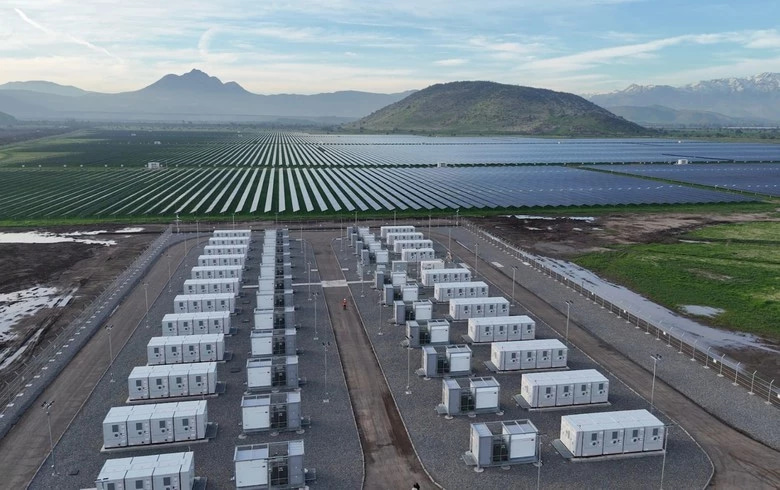
Les acteurs du secteur s'accordent généralement à dire que le stockage d'énergie joue un rôle crucial dans la construction des nouveaux réseaux électriques. La dépendance future des réseaux électriques aux centrales de stockage d'énergie continuera de croître, et le développement du secteur passera d'une simple expansion à une phase axée sur l'exploitation et les applications.
Tian Qingjun, vice-président senior d'Envision Energy, a déclaré que le développement de nouvelles technologies de stockage d'énergie est une condition essentielle à la construction d'un nouveau réseau électrique. La volatilité de la production d'énergie renouvelable impose des exigences accrues en matière de sécurité et de stabilité du réseau électrique ; le stockage d'énergie, en tant que ressource régulatrice clé, joue à la fois un rôle de stabilisateur pour atténuer les fluctuations de la production d'énergie renouvelable et un rôle de ballast pour garantir un approvisionnement électrique fiable au réseau.
Il a cité un exemple : en 2025, la puissance maximale ajustable des nouveaux systèmes de stockage d'énergie dans la zone d'exploitation du réseau national atteindra 64,23 millions de kilowatts, avec une capacité de pointe équivalente à près de trois centrales hydroélectriques des Trois Gorges, assurant ainsi un soutien important au fonctionnement sûr du réseau électrique pendant la haute saison estivale.
De plus, le stockage des énergies nouvelles a un fort effet de levier industriel. Tian Qingjun a souligné que la chaîne de valeur du stockage des énergies nouvelles est longue et qu'elle favorise non seulement le développement coordonné des matières premières et des procédés de fabrication en amont, mais aussi l'émergence de nouvelles pistes telles que la collaboration entre informatique et électricité et les carburants verts. L'entraînement de modèles d'IA à grande échelle exige une puissance de calcul considérable, et les centres de calcul constituent par essence des infrastructures très énergivores. La Chine possède des capacités de production d'énergie à partir d'énergies nouvelles parmi les plus importantes au monde ; en utilisant des systèmes de stockage d'énergie pour lisser les fluctuations de la production d'énergie éolienne et solaire, elle peut fournir une électricité verte stable et fiable aux centres de calcul.
Selon Tian Qingjun, le développement actuel du stockage d'énergie nouvelle est confronté à des défis tels que la concurrence par les prix bas, l'insuffisance des mécanismes de marché, les risques liés à la qualité et à la sécurité dans certaines centrales de stockage, et la fluctuation des prix des matières premières. Il suggère, concernant la concurrence par les prix bas, d'améliorer les règles d'appel d'offres, d'accorder plus d'importance à la technologie et d'orienter le secteur d'une approche axée sur le prix vers une approche axée sur la valeur. Concernant les risques liés à la qualité et à la sécurité, il suggère d'établir une norme de qualité rigoureuse et un système de surveillance des opérations, et de renforcer la supervision de la sécurité tout au long du cycle de vie.
Zhang Tianren, président du groupe Tianneng Holding, a déclaré à l'Economic Observer que 2026 est une année cruciale pour le secteur du stockage d'énergie, qui doit abandonner sa phase d'expansion extensive au profit de la création de valeur. Le secteur du stockage d'énergie connaît actuellement de profondes mutations : le déploiement accéléré de parcs industriels zéro carbone et la croissance exponentielle des centres de calcul dédiés à l'IA engendrent une forte demande en solutions de stockage d'énergie de longue durée et innovantes, ainsi qu'en stockage d'énergie raccordé au réseau. L'évolution technologique et l'innovation en matière de scénarios redessinent le paysage concurrentiel du secteur.
« L’expérience a démontré que la véritable valeur du stockage d’énergie nouvelle réside non pas dans l’expansion à grande échelle, mais dans l’adaptation aux différents scénarios, le leadership technologique et l’efficacité opérationnelle », a déclaré Zhang Tianren. (Pan Juntian)



 Réseau IPv6 pris en charge