Bienvenue à
Greensun Solar Energy, please call
+86 187 1510 8506
for help
 français
 English
 español
 العربية
BESS = Battery Energy Storage System. Both use battery packs for energy storage; the core difference lies in integration level, enclosure form, capacity range, installation & application scenarios.
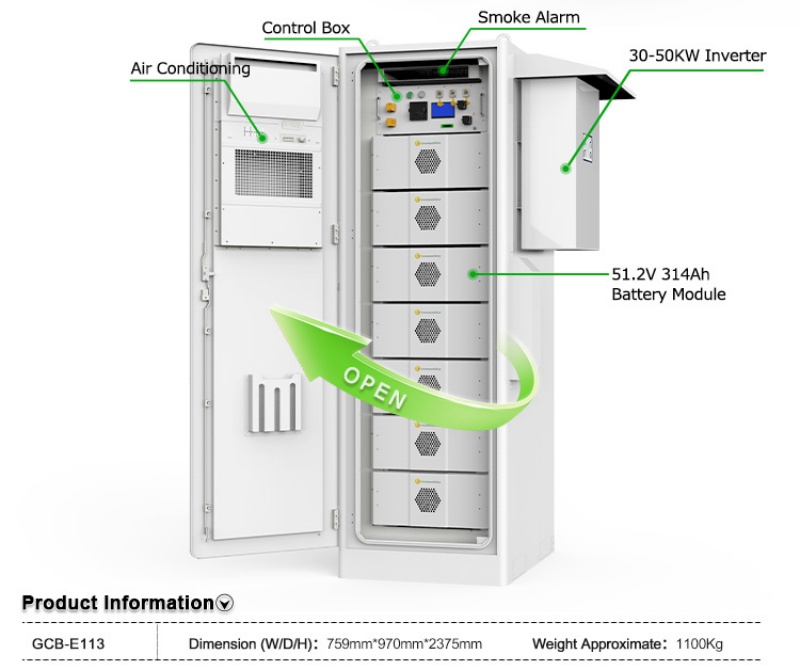
1. BESS Cabinet (Indoor Cabinet-type BESS)
A single rack/cabinet unit, usually installed indoors.
l Structure: Standalone metal cabinet. Inside pre-integrated: battery modules, BMS, cooling, fuse/protection devices. It is a modular unit, multiple cabinets can be wired together to form a larger storage station.
l Capacity: Small to medium. Typically tens of kWh to ~1 MWh per cabinet.
l Installation: Requires prepared indoor room, fire protection, ventilation, floor load-bearing, and on-site electrical connection.
l Environment: Not weatherproof on its own. Must be placed inside a building or shelter.
l Pros: Compact, flexible capacity expansion, easy maintenance of individual cabinets, low transportation weight.
l Cons: Needs building civil works, longer site construction time, cannot be directly placed outdoors.
l Typical use: Commercial building backup power, indoor microgrid, small industrial energy storage, data center UPS/storage.
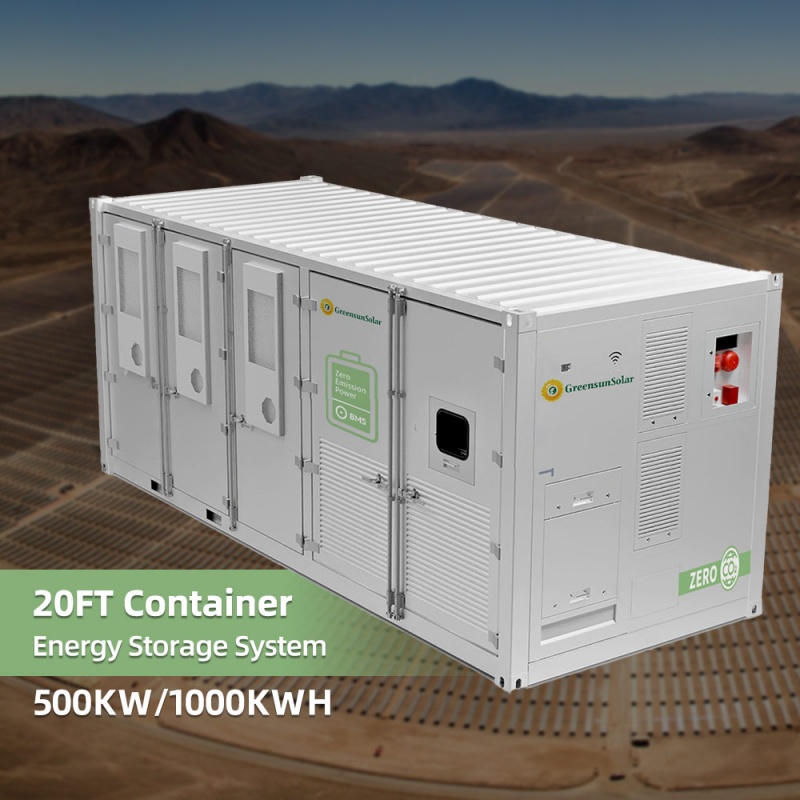
2. Containerized BESS (Container Battery Energy Storage System)
A complete BESS system pre-assembled inside a standard shipping container (20ft / 40ft is most common).
l Structure: Full turnkey system inside the container: battery cabinets, PCS, BMS, HVAC cooling, fire suppression, switchgear, monitoring system. Factory fully wired and tested. Delivered as one whole unit.
l Capacity: Medium to large. Usually 1–5 MWh per 40ft container.
l Installation: Outdoor ready. Just needs foundation, cable connection. No building required.
l Environment: Weatherproof, dust/water resistant, designed for direct outdoor deployment.
l Pros: Fast site deployment (plug-and-play), factory pre-testing, less on-site construction, easy relocation.
l Cons: Larger footprint, heavy, harder to maintain individual battery racks compared with indoor cabinet systems, higher shipping cost.
l Typical use: Utility-scale energy storage, solar+storage farms, remote mine power, grid peak shaving, temporary power for large projects.



 Réseau IPv6 pris en charge